anitahazari
Tel: 07982 715126
[email protected]


GMC Specialist Register Plastic Surgery 4277037
  • Home
  • Profile
    • Memberships
    • Publications
    • 360 evaluation
    • Appraisal
    • E Logbook
  • Procedures
    • Breast Reconstruction
    • Breast Implants
    • Fat transfer Breast Enlargement
    • Breast Reduction/ Uplift
    • Inverted nipples
    • Male Breast Reduction
    • Abdominoplasty/ Tummy-tuck
    • Brachioplasty (Arm lift)
    • Thigh Lift
    • Liposuction
    • Labiaplasty
    • Expanded & Prominent Ears
    • Upper Blepharoplasty
    • Botox, Fillers & Dermaroller
  • Scar care
  • Hospitals
    • Queen Victoria Hospital
    • Kent & Canterbury Hospital
    • Chaucer Hospital
    • One Ashford Hospital
    • The McIndoe Centre
  • Photos
    • Breast Implants
    • Implants Uplift
    • Breast Uplift (Mastopexy)
    • Removal Implants Uplift
    • Breast Reduction
    • Male breast reduction
    • Tummy-tuck/Liposuction
    • Arm-Lift
    • Thigh Lift
    • Upper Eyelids
  • Patient Diaries
    • Michelle: My breast reduction
    • Louise's DIEP reconstruction diary
    • Melissa's Tummy-tuck
    • Charles' Gynaecomastia Story
    • Morag's tummy tuck story
    • Kate's Weight Loss surgery diary
    • Hannah's Labiaplasty story
  • Links
    • Sitemap
  • Anaesthesia
  • Media
    • Magazines
    • TV & Radio
  • Testimonials
  • Contact
    • Private Secretary
    • NHS secretary
  • Blog
  • Events
  • Privacy Notice

The concept of perforsomes:  a lecture by Prof Michel St Cyr from the Mayo Clinic at QVH

15/12/2013

 
Picture
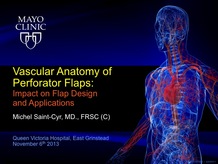
A fantastic lecture was given by Prof. Michel StCyr, Plastic Surgeon at the Mayo Clinic, USA. He introduced the concept of perforsomes for raising flaps i.e. the blood supply patterns by which a surgeon can lift living tissue and transfer it to another part of the body. It was great to meet up with Michel- we were surgical fellows at the Kleinert Institute of Hand and Micro-surgery, Louisville in 2004. For QVH, it was a new take on an old association- Sir Archibald McIndoe worked with the Mayo brothers in Rochester for 8 years in the 1930s before he came to the UK at the behest of Lord Moynihan. He eventually set up the Queen Victoria Hospital, East Grinstead.
Quilting in tummy-tucks reduces seroma

3/11/2013

 
Picture
Abdominoplasty or tummy-tuck is one of the most frequently performed cosmetic operations. And seroma or fluid collection, when you return to the clinic with a feeling of  'water-bed' under the skin layer, is one of its commonest complications. For over 3 years, I have been quilting the tummy skin down onto the rectus sheath to obliterate the space where seroma forms with a Quill knotless barbed dissolving suture  in my DIEP breast reconstruction patients,  where the tummy tissue is used to reconstruct a breast. The closure of the tummy is very similar to that of a cosmetic tummy tuck. 


With quilting, I noticed that the seroma rate was significantly reduced and since incorporating the same technique for  cosmetic tummy-tuck patients, I have not looked back. The contour is much more pleasing, the tension across the tummy skin is more evenly distributed and the seroma rate is almost negligible. The only  downside is that in some slimmer patients, the quilting can show up as puckering or dimples in the skin; however, these disappear by 10 weeks when the suture is absorbed by the body. There have been  several scientific studies in plastic surgery journals which have demonstrated the reduction in seroma with quilting in tummy tucks compared to the use of tissue glue or patients with no quilting.


  1. Does Quilting suture prevent seroma in abdominoplasty? Plastic Reconstructive surgery March 2007.
  2. Suction drains, quilting sutures, and fibrin sealant in the prevention of seroma formation in abdominoplasty: which is the best strategy? Aesthetic Plastic Surgery April 2012


Capsular contracture: prevention and treatment options

9/10/2013

 
Picture
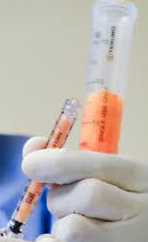
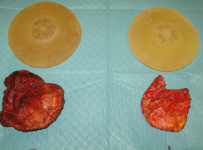
This photo shows the thick capsule (scar tissue) that has been removed from around old intact implants. Grade IV capsule contracture is when the breast becomes hard, painful and distorted. 

Prevention is the key, however, as we do not the causes of capsular contracture, this is aimed at good surgical technique, including the use of a mixture of antibiotic solutions to irrigate the breast cavity before placement of implant. This can reduce the capsular contracture rate from 12% to 2%. However, when it does occur, treatment is usually surgical, in the form of capsulectomy (total removal of the capsule). There has been limited success with the use of the asthma drug Accolate in softening the capsule in 50%. To read more, go to the procedure page on Breast implants which tells you everything you need to know about breast implants.

Fat transfer in Breasts- controversies explained

7/9/2013

 
Picture
Fat transfer in breasts has been in the news over the last year.  It involves removing fat in an atraumatic way from parts of the body such as hips, abdomen and thighs and re-injecting it into the breast either to enhance its volume usually by a cup size for breast augmentation or to fill small defects after breast cancer lumpectomy surgery. Great care has to be taken to transfer fat into the subcutaneous or intrapectoral planes and not to inject fat into the breast tissue itself. As the fat can re-absorb by 30- 40%, two or more ‘top-up ’operations may be required. 


On MRI or mammograms, the resorption can be seen as calcification. A trained radiologist can distinguish between microcalcification arising from fat transfer vs. breast cancer. However, there is limited scientific evidence regarding the effect of stem cells, contained within the transferred fat, on breast cancer. Studies in the laboratory have shown that presence of stem cells favour the growth of tumour cells, but this has not yet been substantiated by clinical trials. The American Society of Plastic Surgeons (ASPS) has advised mammograms before and after fat transfer to provide re-assurance to the patient regarding any new abnormalities that may develop. It advises against fat transfer in cosmetic patients at high-risk of breast cancer such as those with personal or familial history of breast cancer and/or BRCA-1, BRCA-2 gene inheritance.

In the UK, guidelines from the Breast Interface group (BAPRAS and BASO) were published in 2012 are available on the link: http://www.bapras.org.uk/downloaddoc.asp?id=666.


Why do we need a good sports bra?

14/8/2013

 
Picture
After any breast surgery, the supporting ligaments in the breasts are put under strain or have been divided either partially or completely. When you have Breast Implants or Breast Uplift/ Reduction surgery, the breast gland is lifted off the underlying muscles too. 

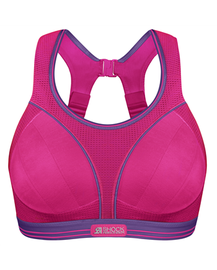
Hence, for 12 weeks afterwards it is important to avoid any bouncing movements such as running, trampolining, body pump, aerobics, circuit training or horse-riding. After this period, it is crucial to wear a good sports bra during sporing activities to maintain the surgical results that have been achieved. 

A Running Level sports bra such as the Shockabsorber will reduce bounce by as much as 60-75%. Wearing a lycra crop top above this will reduce the breast movement even more by providing compression.


Looking after your Surgical wounds

18/5/2013

 
Picture
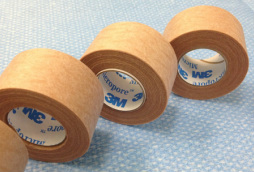
I almost always use tan coloured micropore tape for surgical sites as a dressing both for my cosmetic and reconstructive surgery patients. Once the first dressing change has been done, you will be advised to re-apply the micropore tape without tension to support the scar for 3-4 weeks after surgery. In the first 2 weeks, the tape can be left on. However, after showering (no baths!), dab the tape dry with paper towel and then using a hair-dryer on a cold setting, blow dry the tape until 'bone-dry'. Do not leave it damp as this can make the underlying wound/ scar soggy. The tape is latex-free, hypoallergenic and kind to fragile skin. It is microporous, which means it is not occlusive and hence the need to ensure the tape is dry after showering! When changing the tape, start off at one end and peel off, low and slow back over itself, supporting the fragile skin underneath with your fingers.


There is anecdotal evidence of surgical wound cross infection from household pets. Ensure you have clean bedsheets when you return home after surgery and do not allow pets in your bedroom and no cuddles for the first 3-4 weeks!

Once you have stopped using the tape 4 weeks after surgery, massage the scar with pressure using a non-perfumed cream or bio-oil (do not use an old pot or bottle incase it is harbouring bugs, buy a new one!) for several weeks to months, and always use high sun-block for the first year in the sun. Remember scars do take a year or so to fade.

Getting the Transverse Abdominus muscle into shape

25/4/2013

 
Picture
For years after the birth of my son, I had 'bulging' of my tummy, one so often gets when doing sit-ups. My Rectus Abdominis muscle or 'six-pack', which often separates in the midline during pregnancy, was the root cause. Performing crunches had infact kept this separation open.  One of my Plastic Surgery male colleagues who has been doing Pilates for the last 15 years for back pain, recommended it. 

I started Pilates 6 months ago with one of my hospital physiotherapists who is also a qualified instructor, and the difference is already quite noticeable! The gap between the two parts of my rectus abdominis has reduced to a finger breadth. The back pain which I got after a long day of operating, is gone. What has changed?


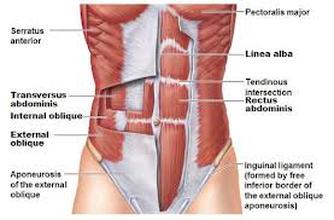
I have trained the transverse abdominis muscle and decreased the separation, medically known as 'Diastasis' or 'Divarication'.The transverse abdominis muscle is a key stabilizing muscle often used as part of core stability. As seen in the diagram above, it is the deepest of the tummy muscles and acts as the 'internal girdle'.  I firmly believe that all women after pregnancy should learn to strengthen their Transverse Abdominis. Postural or rehabilitation programmes such as Pilates concentrate on building core stability and actively work on the transverse abdominis. Always do Pilates with a trained instructor and never continue if you have pain.


For medical evidence  on the effect of Pilates on Transverse Abdominus:
click on: The influence of Pilates training on the ability to contract the Transversus Abdominis in asymptomatic individuals Journal of Bodywork and Movement Therapies 2005, Elsevier

Useful sites for more information are given below, please click on the link:
Wikipedia Pilates 
NHS Choices: A Guide to Pilates

Buying trainers for the Race for Life, 9 June 2013

6/4/2013

 
Picture
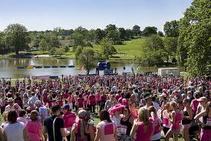
There are two charity runs that I do every year: the summer one is the Race for Life  to raise money for Cancer Research UK and is at Dunorlan Park , Tunbridge Wells on 9 June, Sunday. And I have just enrolled! If you wish to help me raise money, please click on my JustGiving  page. The second one is later on in the year and is the 10k for the Hospice in the Weald.

Well fitting trainers are so important- I knew this, but did not really follow it and as a result, had a black toenail last year. Well, I have finally got around to a ‘fitting’ at the RunningHub, a specialist shop, run by keen TW Harriers runner, Allan Cheek. He took over an hour to video analyse my gait and suggest specific trainers that would support and cushion my feet (I am a diabetic). And I learnt something new: there should be a thumbnail width of space between  the end of the toes and the trainer. No wonder I had problems with my old pair!

Forward>>

    RSS Feed

    Archives

    February 2020
    May 2019
    December 2018
    February 2018
    August 2017
    May 2017
    January 2017
    May 2016
    March 2016
    January 2016
    November 2015
    August 2015
    June 2015
    May 2015
    March 2015
    February 2015
    January 2015
    December 2014
    November 2014
    October 2014
    August 2014
    June 2014
    May 2014
    April 2014
    March 2014
    February 2014
    January 2014
    December 2013
    November 2013
    October 2013
    September 2013
    August 2013
    May 2013
    April 2013

    Categories

    All
    Breast Surg Info
    Breast-surg-info
    Charity Runs
    Lectures
    Media
    My Beliefs
    Surgical Aides
    Surgical-aides
    Tummy Tuck Info
    Tummy-tuck-info

Picture
Picture
Picture
Picture
Picture
Picture
Profile
Procedures
Hospitals
Photos
Contact
Links
Testimonials
Blog
​

​Privacy Notice
Private  07982 715126
[email protected]

-------------------------------------------
NHS    01342 410210 / 01342 414465
[email protected]
GMC Specialist Register Plastic Surgery 4277037
Terms and Conditions | Sitemap | Registered in England